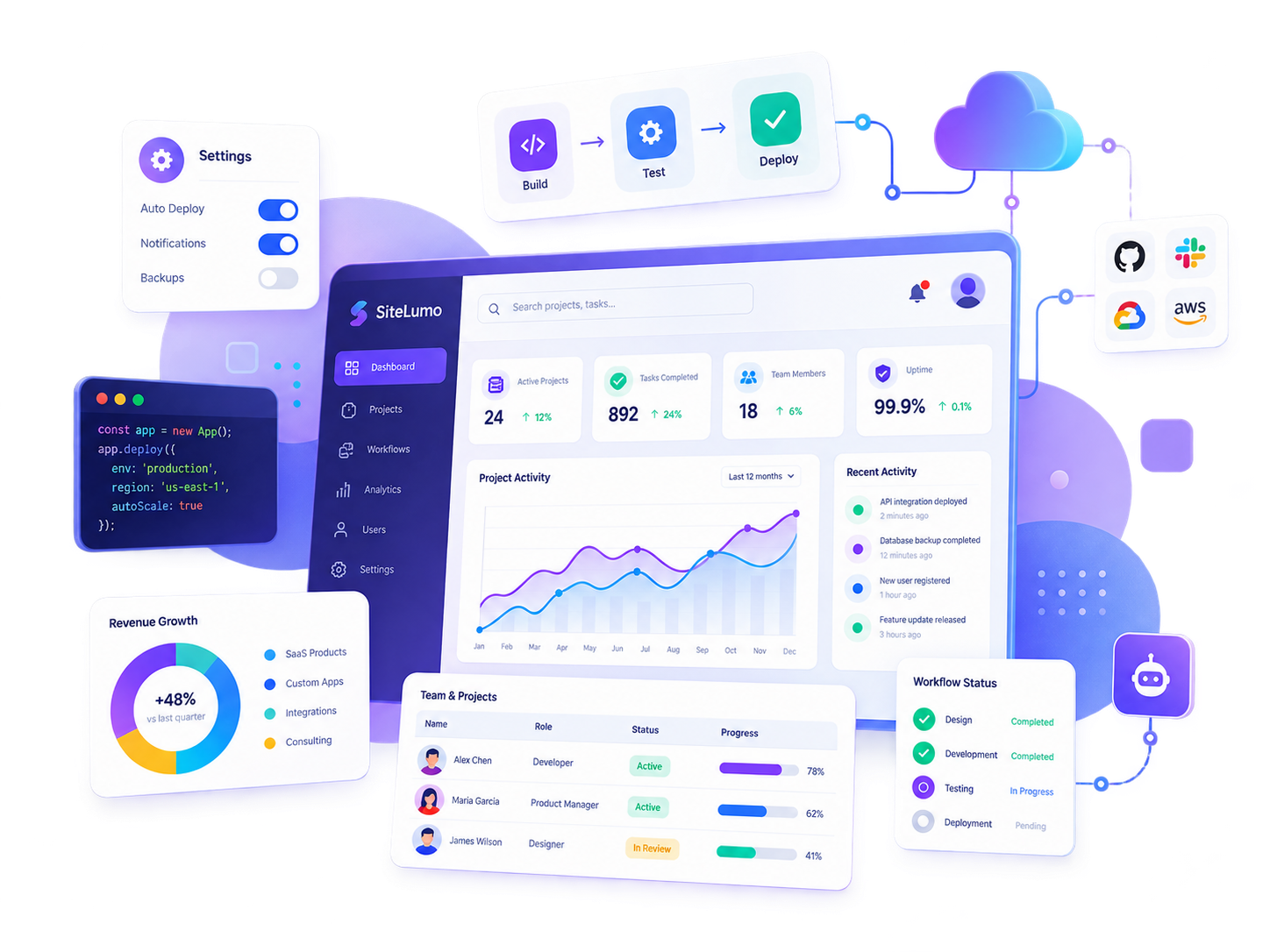
Software Built Around the Way Your Business Works
Custom web apps, mobile apps, SaaS products and internal business software — scoped around real users, workflows and outcomes rather than a generic feature list.
SOFTWARE SERVICES
Choose the software path closest to what you need
Each project is scoped individually. Start with the closest fit, then we define the useful first version in writing.

Web Apps
Browser-based applications, customer portals, dashboards and operational tools built around real workflows.

Mobile Apps
Mobile products for iOS and Android when the job genuinely benefits from a dedicated app experience.

SaaS & MVP Development
Launch the useful core first, validate the product, then expand from real usage and feedback.

Business Software & Internal Tools
Custom systems for operations, approvals, records, reporting, admin work and connected internal processes.

For customer portals, dashboards, booking systems, marketplaces and browser-based tools that need more than a normal website.
We plan the user journey, roles, data and business rules together so the interface is connected to the work behind it.
Browser-based software for customers, teams and operations
Built around the workflow, not around a generic dashboard template.
Accounts, permissions, forms, data, notifications and integrations are defined from the actual job the software needs to do.
MOBILE APPS
A mobile product should earn its place on the phone
We build mobile apps when mobile-specific behaviour, repeat usage, notifications, field work or a dedicated customer experience makes an app worthwhile.
The app, backend, accounts and integrations are scoped as one product instead of treating the screens as the whole project.
A first release should prove the important product assumptions without carrying every future feature from day one.
We define the core user, core action, essential admin needs and the minimum reliable infrastructure needed to launch.
Launch the useful core first, then grow from evidence
MVP does not mean disposable.
The first version should be intentionally smaller, but still structured so successful parts can be extended instead of immediately rewritten.
Replace disconnected manual work with one practical system
Internal software can centralise repetitive work that is currently spread across spreadsheets, inboxes, chat messages and unrelated tools.
Typical projects include admin systems, approval flows, operational dashboards, record management, reporting and workflow tools.
Custom development is not automatically the best answer. It makes sense when the workflow or product is important enough that forcing it into generic tools creates more cost, friction or limitation than building the right system.
Off-the-shelf tools create friction
Your team is adapting the work to fit the software instead of the software supporting the way the business actually operates.
Important workflows are scattered
Data, approvals, customer actions or operational steps are spread across too many disconnected tools and manual handoffs.
The software itself is part of the product
You are building a SaaS, portal, marketplace, internal platform or customer experience that cannot be reproduced by configuring a standard website.
A clear written path from problem to working product.
Calls are optional. Requirements, decisions, screenshots, prototypes, test notes and approvals can all be handled asynchronously in writing.
01
Understand the Job
02
Scope the Useful First Version
03
Structure & Product Direction
04
Build & Review
05
Test & Launch
06
Support & Improve
Software should stay understandable after the first launch.
The goal is not simply to make the first version work. The scope, architecture and handover should remain practical as the product changes.
01
Scope Before Features
02
Written-First Communication
03
Architecture Matched to the Product
04
Ownership & Handover Defined
Software Project Questions
Have a software project you want to build or improve?
Tell us what the software needs to do, who will use it and what is not working with the current process. We’ll review the scope and continue in writing.